Tell us about your own evolution as an artist.
Thursday, March 27, 2014
AAPEX Interview: Sandra A. Daley-Sharif
Tell us about your own evolution as an artist.
Sunday, October 20, 2013
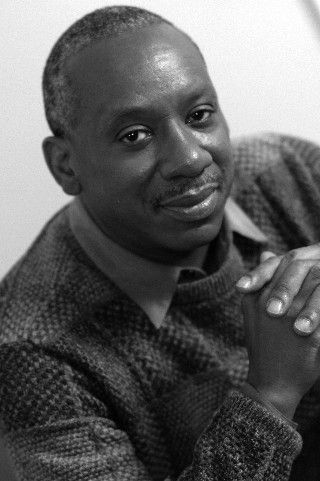
AAPEX Interview: Nathan Ross Freeman
![]() |
| Nathan Ross Freeman |
My mother exposed my brother and me to ... everything. My first rock and roll show, My first symphony concert. Recitals, Trips to the mission. My father harped on education, education, education. They both made a big deal about every crayola disfiguration and term paper. I made my brother tell me a story every night before I went to sleep. I was fortunate to be an African American male who was not raised as a victim. So all I knew is what I could do! Never had a tow that road background and we were lower middle class family. I was reared on constant creativity and choice.
Tell us about your own evolution as an artist.
I graduated from St. Joseph's University, Philly PA. Got my first job as a para-professional teaching reading at Tioga Community Youth Center, an alternative education school. I decided to use theatre as a vehicle for remedial reading and behavioral modification. Couldn't find a play to fit the constituency of my class, so I wrote one, Where Is Momma. The center got behind it and we performed it at my al ma mater high school, St. Joe's Prep. It was so well received, though the staging was absolutely atrocious, that the center exec. Director awarded my cast of students a week of downtown theatre and a put up at a 5 star hotel. We went to Academy Of Music, Shubert and Walnut Theater show. It was glorious. The publicity of this outing together with this pioneering vehicle of theater (then) to develop underserved youth. Temple invited us to perform the play for 3 days and the renown Walk Auditorium ... and ... paid the youth $45 per performance. I remember the closing performance, everybody gone, stage struck, sitting mid row, alone, staring at the stage with the ghost light the only illumination. Declared I was in love and the rest is history.
What inspired the film Mr. Bones?
Debra Terry, a renowned BET comedian and dear friend, came to me about an idea of a reunion of 3 close friends after going their separate adult ways. With some controversy I amended her story of coming home to do a Christmas Play for their hometown congregation, to their becoming friends as a result of surviving a church bus crash. While playing in the park they find the skull of a missing child. Instead of reporting it they make it a totem, a shrine and bring artifacts of their childhood to share with their deceased parents who died in the crash. Their reunion is the result of someone finding the skull and all the treasures during their adult years. They come home to face the music and, thus, confront and purge their demons of grief.
What are your current projects?
I have 2 feature films in development: The Quad and Topaz D. I have one script in development The Den. And I have one short feature I wrote to shoot myself and 2 superlative actors I grew up with, in professional theatre in Philly: Donald Newton (Mr. Bones Co-Star) and Wendy Pearson (played all my leading lady roles with Bushfire Theatre). The film is The Other Way Around; a true art house film I am so proud to have written and will be a sleeper at every festival that screens it. Principle Photography in April.
Wednesday, June 19, 2013
Meet Angelina Grimke: An AAPEX Interview with Tosha Thompson
![]() |
| Tosha Thompson |
Here's more about our leading lady in her own words:
1. What role did theatre and the arts play in your childhood upbringing?
It played a huge role, even though I didn’t realize it until much later. Performance and the Arts was something that I always did or was asked to do. I didn’t realize it was the silent, patient friend in my life that was always there for me, never getting it’s proper due until much later; when I was bold enough to say, “this is not just a hobby, this is my career. This is not an optional part of my life, but a very necessary part of my life. Indeed, it is part of my purpose for being here and a huge component of the passion that helps me truly live. It all started in my community’s little country church when I was growing up. It comforted me when I was afraid, kept me company when I was lonely, celebrated with me during my victories and challenged me so that I would never become complacent. I smile just thinking about those early years. Yes, the theatre and the arts have been a patient friend, one that I will never neglect again.
2. Tell us about your evolution as an artist.
Well I can tell you it is ongoing! I never feel that I have evolved enough. I never really feel like I know what I’m doing. I just try to be as authentic as possible when I am communicating. Perhaps that is one thing. I realize now that actors are communicators. It doesn’t sound as glamorous, but it’s a better description of what we do. We take dialogue and communicate as effectively as we can our character’s life story through our actions, our intonations, our clothing, even our silence. We should never catch ourselves (nor let anyone else catch us) “acting” up there. Authenticity matters.
3. How are you preparing for the role of Angelina Grimke?
From what I’ve read, Angelina Grimke was a phenomenal woman during a time that being phenomenal was the last word that one would use to describe a woman. She was opinionated and outspoken. She was passionate, curious and creative. She lived during a time when she would be scorned for most of her positive attributes that we would so freely celebrate in her today, because she was a woman. There was always a battle Angelina had to fight just to live an authentic life during those times. Everyone can identify with struggle, oppression of some sorts, and denial of those things that make life seem nearly unbearable without them. Life is full of conflict and without conflict you have no real dramatic story. See where I’m going…
4. Tell us about your work with the NAACP and about the mission of the organization in the 21st century.
When I was first approached by the genius of Jaz (Dorsey), I couldn’t believe the timing of everything that was about to happen. At the time of our first meeting, we were working together on another project and I had also recently joined the NAACP as the PR/Media Chair. We struck up a conversation. He found out my association with the NAACP and by the end of the conversation we both knew that this play had to be done! It had to be done because the story’s central character is the daughter of one of the founders of the NAACP. Unbelievable! The NAACP is really putting its focus back on the community and what the community feels is important. We just wrapped up Environmental Justice Earth Day. We had an impressive panel, which included our chapter president, Dr. John Arradondo speaking on the disparities of low income neighborhoods and disproportionate amounts of landfill placement and unhealthy living conditions. We pursue any injustice in our communities and welcome any suggestions at any time regarding issues or policies that need our attention. Please know that there is always an open door at our office for any concerns. I think our mission statement sums it up best: The mission of the National Association for the Advancement of Colored People is to ensure political, educational, social and economic equality of rights of all persons and to eliminate racial hatred and racial discrimination. To reiterate: we are passionate about the rights of all disenfranchised or marginalized people.
Saturday, January 19, 2013
AAPEX Interview: Nathan James
Blog: http://nathanjamespoet.blogspot.com
Twitter: @ImNateJames
Agent contact: Mary Anne Claro (215) 465-7788 http://clarotalent.net/
Monday, October 29, 2012
AAPEX Interview: Melissa Maxwell wins AAPEX Filmmaker Award
Wednesday, July 25, 2012
AAPEX Interview: Paula J Riley

What role did theatre and the arts play in your childhood and upbringing?
Being the child of performers, I was exposed not only to the external environs of the Borscht Belt circuit of the 1940’s, but the constant shenanigans of my comic father, who would bounce me upon his knee while trying out many a song or funny new routine. For attention I would dance for the inevitable weekly crowd of relatives who’s accolades have never quite been matched.
I went to a performing arts camp in the Berkshires called Stissing Lake where a young Jerry Herman was the musical director. I performed as a little ballerina in Finian's Rainbow , A Tree Grows in Brooklyn. I did the traditional school plays where I would sing, act and dance. I studied at several of the day’s foremost acting schools and with teachers such as John Stix, at The Herbert Berghof Studios. As a New Yorker growing up in the 60’s, I was privy to the likes of many struggling young actors, comics and singers. I hung out at the original Improvisation begun by Bud Friedman and his wife Silver on West 44 Street in Manhattan. I would occasionally get up to sing but I preferred hearing the humor of Robert Klein, Richard Prior, Rodney Dangerfield or Stiller & Mera trying out their latest material. Or I would listen to the melodious tones of Bette Midler, Leslie Uggums or Liza Minnelli. Their nightly piano player was Charlie Smalls who would later write the Broadway musical The Wiz
As it was the rise of Off-Broadway, many of the smaller houses were playing some of America’s greatest – and still unknown – playwrights of the century such as Edward Albee and Sam Shepard. I worked part-time at the famous Village Gate – again rubbing elbows with a young Neil Diamond or Stacy Keach who played the title role in MacBird!, an Off-Broadway anti-war satire by Barbara Garson staged in 1966.
In that same year, I met and began studying with Iza Itkin and worked with her until 1970. I was a charter member of Iza’s repertory theatre company in Manhattan, The Chamber Theater. Iza was the daughter of David Itkin of the famed Goodman Theatre in Chicago. Some of Iza’s directorial accomplishments were: The Infernal Machine produced Off-Broadway and The Prisoner at the Arena Stage in Washington, DC. She also wrote a poetic memoir called A Becoming, I Iza. I believe her greatest talent was directing and her contribution to theatre is the creative structure I now call The Spiral Theatre Studio.
At the Chamber Theatre, I studied the art of improvisation, which led me to a deeper understanding of myself as well as the intricacies of acting. This would have a lasting and profound influence upon how I would later teach. Working with a closely-knit group of actors for an extended period of time gave me great insight into the acting group dynamic. This is where my true grit was challenged as an actor. By osmosis I began my tutelage in directing. I feel I need to honor her teachings on that structure. I want to fulfill her dream (and mine) by recreating this magical venue.
Tell us about your own evolution as an artist.
During the period that followed my studies, I married and divorced, wrote, directed and sang in several nightclub acts, an early love of mine. I even returned to college for Interior design, looking for the creative part of myself I was yet to fulfill.
I had always been the one that adults would come to for advice when I was as young as seven. And being the good little child I would somehow find an answer that would satisfy them and it would be right on.
I now know it was my intuition that gave me a sense of others, a perception that has grown and helped me “know” through feelings not intellect. Of course this has been a great factor in a career in which I can gratefully apply this gift. And so it seemed clear and natural for me to coach, teach and direct.
I became active in a neighborhood theatre company and directed a couple of productions. I had begun to scratch the surface of my intended destiny. But life was hard financially and I had to take in roomers in order to make ends meet. A friend who worked for a popular modeling agency recommended that I house out of town models and their mothers, M & M’s as I called it. I also worked as a bartender which supplemented my income but also made it too tempting to have “just another drink” before I went home. I had a monkey on my back that I didn’t address until many years later. Meanwhile, I picked up whatever jobs I could as an actor, director or singer.
My directorial credits include: A Fake Fiasco by Fred Timm, I Feel Swell, by Henry Meyerson, Wednesdays by Sue Brody, Extreme Unction (Reading), by Marvin Cotlar, Traffic Jam by Bonnie Corso, The Reading by John C. Davenport, Come Back, Little Sheba by William Inge, Golden Boy by Clifford Odets, The Wreck on the 5:25 by Thorton Wilder, From Lindsay by Monica Raymond and The Stronger by August Strindberg.
Some of the plays from which I directed scenes for my 3-month “From Scratch To Script” workshops are: Beautiful Clear-eyed Woman by Diana Amsterdam, Little Murders by Jules Feiffer, Come Blow Your Horn by Neil Simon, A Few Good Men by Aaron Sorkin, The Glass Menagerie by Tennessee Williams, Glengary Glen Ross by David Mamet, The Member Of The Wedding by Carson McCuller, Laundry & Bourbon by James Mclure, Lie Of The Mind by Sam Shepard.
Throughout my acting career I have portrayed such characters as: Daisy Werthan in Driving Miss. Daisy, Amanda in Glass Menagerie, Edna in Prisoner of Second Avenue and Thelma in ‘Night Mother, just to name a few.
Another love of mine is writing. I started to write a play and then another. I also wrote many short stories and poems. They were reflections of my inner burnings. However, one of the plays, which took me three years to complete, had actually been plagiarized. I can’t reveal more on this because I won’t expose names but it appeared on a major TV network with a star-studded cast. This was a double-edged sword since it was good enough for that venue but I was never credited with its creation. I am still hoping to produce the play that was made into a TV movie, on The Spiral Theatre stage. I still write poetry – it’s a great outlet.
What is the "spiral stage"? What is you mission here, and why?
I am prepared to carry on the tradition of this sustainable poetic construct I call “The Spiral” which was originally conceived and built by Iza Itkin. I am now partnered with a prolific playwright, Coni Koepfinger, and will be directing her play Coffee House Magik which will be The Spiral’s inaugural performance. While I continue teaching, coaching and directing, my legacy is to resurrect the stage I learned how to act upon – which now bares the name The Spiral Theatre Studio.
The stage is a synthesis of the free organic and the structured geometric. Working on this stage helped me create an organic teaching process that insures the actor/student the most nuanced, and unselfconscious performance as possible. I call this the Primary Principles of Acting (PPA). I am writing a guide by the same name for actors, which describes my process and offers several effective exercises to create an in-depth character core for scene work, auditions and performances.
It is my goal to create this stage in a sustainable way and therefore become the first truly “Green” theatrical performance space in New York City. We can achieve this mostly with the ability to stage all our productions on this environmentally friendly construct. By not having set load-ins and load-outs, we can function in a controlled environment.
We can dictate what comes into our space, which will be green-optimized from the ground floor up.
One of the important elements of this theatre is to introduce “essential theatre” to both the general public at an affordable price and to have a specific department which conducts educational outreach for public and high school students.
For more information please go to:
Thursday, May 24, 2012
AAPEX Interview: Dr. Henry Miller via Cultural Weekly

Wednesday, May 16, 2012
AAPEX Interview: Linda James-Johnson

Monday, May 14, 2012
AAPEX Interview: Michael Aman
Tuesday, April 3, 2012
Calvin Ramsey wins AAPEX Book Award for 2012 for RUTH AND THE GREEN BOOK


Sunday, March 18, 2012
AAPEX Interview: Jacqueline Lawton
Washington DC based freelance dramaturg Jacqueline Lawton has had the kind of career that might make up many a dramaturg's fantasies and daydreams. Her artistic and administrative adventures in our nation's capital have allowed her to work with such legendary theatre companies as Woolly Mammoth, Arena Stage, African Continuum Theatre, Theater of the First Amendment, and the John F.Kennedy Center, to name but a few. She lists some 30 productions on which she has served as production and new play development dramaturg over the past decade, and from the stunning spectrum of activities on her CV, she is also clearly a serious force in the DC theatre community.
In addition to that, I have discovered that as a playwright Jacqueline has made a major contribution to the materials that we so urgently need to investigate and better understand the history of the African American contribution to the theatre.
Thanks to another fabulous DC lady, Jewell Robinson, who is the Director of Public Programs at The National Portrait Gallery, Jacqueline was commissioned to create a work for the stage based on the life of 19th century Shakespearean actor Ira Aldridge, who rose from the ashes of the African Grove Theatre to an astounding career that made him a sensation in England and Europe and ended with his death in Poland.AAPEX will have more to say about Aldridge, who we choose as our muse for 2012, but right now I'd like to introduce everyone to Jacqueline Lawton:
What role did theatre and the arts play in your childhood and upbringing?
Theater and the arts have always been a part of my life thanks to my mother’s love of MGM movie musicals. Amazing artists like Judy Garland, Gene Kelly,Debbie Reynolds, Fred Astaire, Ginger Rogers, Bing Crosby, and Danny Kaye taught me the ins and outs of show business. I’d watch these movies over and over again. I learned the songs, dance steps, and dreamed of one day becoming a performer. I read Shakespeare before I learned it was hard to read. I wrote plays to entertain my family, especially my younger sister. Also, my mother had these amazing craft books. My sister and I made decorations, puppets, and costumes based on different holidays, fairy tales, and traditions. We didn’t dress up for Halloween, but a part of our Thanksgiving tradition was to make costumes, sing made-up songs and act out little made-up plays. In elementary school, we took field trips to see plays at the local civic center. The first professional play I remember seeing was Jack and the Beanstalk. I fell in love with the Harp. My family remains incredibly supportive of my theater career.
Tell us about your own evolution as an artist.
In Junior High and High School, I continued to write and found opportunities to perform through UIL Poetry Interpretation and One Act Play Competitions. In college and graduate school at the University of Texas at Austin, I studied theater, playwriting, solo performance, performance studies and screenwriting with Amparo Garcia Crow, Jill Dolan, Fran Dorn, Ruth Margraff, and Suzan Zeder. Each of these women encouraged me to find my voice and tell my stories. I was also a part of The Austin Project, a writing group comprised of women artists, activists,and scholars and led by Sharon Bridgforth and Joni Jones. It was a deeply profound and lasting experience that taught me how theater could be used as a tool for social justice. During grad school, I traveled to Europe (Dublin, Ireland and Venice, Italy) to write and participated in the Kennedy Center’s Playwrights’ Intensive (2002) and World Interplay (2003). At the Kennedy Center, I met the fabulous Gregg Henry and a whole slew of professional directors, designers, actors, and playwrights. From them, I learned firsthand what was possible for me. At World Interplay, I was introduced to performance styles and traditions from around the world. It was amazing and cracked opened my world view! After graduating with an MFA in Playwriting in 2003, I made my way to the east coast seeking adventure and wanting to be a part of an artistic community. In 2005, I did an internship in Literary Management and Dramaturgy at Woolly Mammoth Theater Company and learned how to be a dramaturg from Mary Resing. From there, I worked at the Folger Shakespeare Library and Arena Stage, where I began working as a teaching artist. As far as who I'll be in the future, I see myself growing, traveling and pushing myself beyond who I am right now. I envision myself prolific, writing plays and continuing to work in the theatre, contributing to the magic that happens in every performance.
When and how did you discover Ira Aldridge and what has your journey with him been?Ira Aldridge is a much lauded and highly celebrated 19th century Shakespearean actor. He was born in America in 1807 and began performing at the African Grove Theatre. In 1833, he made his London stage debut, toured all over Europe and Russia, and is the only black stage actor honored with a bronze plaque at the Shakespeare Memorial Theatre at Stratford-upon-Avon. He is an absolute legend. However, very little is known about him, owing to racial prejudice of the time period. I was first introduced to Ira Aldridge in college and learned more when I began teaching at Montgomery College and the University of the District of Columbia. Then, in the spring of 2010, Jewell Robinson, the Director of Public Programs for the National Portrait Gallery (NPG), commissioned me to write a play about Ira Aldridge for NPG’s Culture in Motion Series*. I give great thanks to director and playwright, Jennifer L. Nelson, who recommended me for the gig! With Ira Aldridge: The African Roscius, I chose to the tell Aldridge’s story from the point of view of his daughter, Amanda, who was a professional singer,composer and teacher. Ira Aldridge died before she was born, so all she had of him were diary entries, photographs, theater reviews, his guitar, and letters. My absolutely favorite letter was written to Ira from his son, Ira Daniel, an excerpt of which reads: “My Dear Papa, - Mamma is not very well today. Dr. Popham was here on Monday last to see her. We are very dull without you. Mamma and I send our best love and kisses, and I remain your affectionate son, Ira Daniel Aldridge" The post script, which always touches my heart, reads: "I send kisses for you, Papa. Send us some, don’t forget.” It’s a remarkable story of a great man who began his life as a poor boy from Lower Manhattan and emerged as one of the world’s finest artists. Avery Brooks, a celebrated Shakespearean actor in his own right, played Ira Aldridge and Jewell Robinson played his daughter Amanda Aldridge. The play was presented twice at the National Portrait Gallery in collaboration with the National Museum of African American History and Culture. Recently, it was presented as part of the Savannah Black Heritage Festival at Armstrong Atlantic State University. My hope is that we can continue presenting it at colleges and universities throughout the Unites States.
What are your thoughts on DC as a theatre town?
DC is a diverse, talented, vibrant, and passionate theater town! Yes, we struggle with sustaining funding for our artistic institutions as other cities have in this current economy. We struggle with presenting racial and gender parity on our stages. We struggle as local playwrights to see our plays staged.Yet, for all that, I've been working nonstop since moving here in 2006. I’ve worked as a freelance dramaturg, playwright and teaching artist and even as an actor, director and producer on occasion. As playwrights, we’re surrounded by brilliant and ambitious theater artists and arts administrators who are committed to working on new plays. For instance, in 2008, Active Cultures, a Maryland based company that creates locally-based worked for a multicultural and multigenerational audience, commissioned and produced my play Mad Breed. The next year, under the auspices of the Hegira, I produced a workshop production of Anna K as part of Round House Theatre's Silver Spring Series and co-produced Deep Belly Beautiful as part of the Mead Theater Lab at Flashpoint. Last year, my play, Love Brothers Serenade, received a reading at the Kennedy Center's annual Page-to-Stage new play festival and then received a workshop and reading at Howard University. This year, Theater J, one of the nation's premiere Jewish theater companies, commissioned me to write, The Hampton Years as part of their Locally Grown Festival. What's more, the audiences in DC are diverse, savvy and intellectual; where better to grow and develop your plays! Living here for the past 8 years has been an amazing experience!
Wednesday, March 14, 2012
AAPEX Interview: Max Désir

The Foreign Language Acting Group is proud to recognize Haitian born multi-talented and mulit-lingual actor/singer/model Max Désir as our Artist of the Year for 2012. Max joins the cast of Circle Players production of TITANIC in the role of Joseph Laroche, which runs at TPAC April 5th - 8th.
I asked Max to tell us about himself and his work, and here is what he has to say:
What role did theatre and the arts play in your childhood and upbringing?
Growing up in my childhood church in Haiti, theater and the arts were dormant in my life due to the fact that I was taught that I couldn’t be a Godly man and an entertainer at the same time. I was taught the two were opposites, so I suppressed my innate ability to create a reality that alters life through possibly one of the most transforming apparatuses on earth, the arts. I remember watching movies as a child and reiterating lines and facial expressions of actors as I got to the parts I really liked. As an adolescent, the mirror became my best friend not because I was practicing modeling faces, which became part of my career, but because I wanted to see how convincing and mesmerizing I can be as an actor. Interestingly enough, I still practice in the mirror nowadays
Tell us about your own evolution as an artist.
After years of suppressing my ability as an actor, in 2005 my university (Medgar Evers College CUNY) held auditions for a short film featuring Danny Glover and I landed my first supporting role. Landing that role gave me the confidence and the audacity that I needed to embark on my journey an actor. From that point on, I took continuous classes, workshops and voice lessons. I partook in a lot of student and Independent films, theatrical works, commercials, voiceovers, modeling in different cities.
What brought you to Nashville and what are your "Nashville" objectives?
In 2006, I went to Las Vegas to compete in a nationwide acting/modeling/singing competition called Talent Rock founded by Lou Pearlman. I won in some categories, and received a few offers from agencies. One of these offers came from a Nashville agent. Ever since then, I have been moving between New York and Nashville looking for gigs. Nashville has been very good to my career and has built my resume in more ways than one. I hope to continue to grow as an actor in Nashville whether it is in theater or film and hope to create a triangular relationship between Nashville, New York and Los Angeles. I am also looking forward to working together with my fellow actor, business partner, and friend Stanley Louis as we periodically merge my production company, S.T.A.R. Productions, which stands for Spiritually Renewed And Trained Productions with his all inclusive videography/photography company, imagesProductions to put together independent films, commercials, and original stage plays within the community and abroad.
What are your thoughts on Circle Players and the work they do?
I became familiar and active with Circle Players back in October 2010 when I landed my audition with them for the role of George in “Raisin in the Sun.” From that point forward, it has been an exciting ride working with them. Being the oldest community theater in Nashville, Circle Players stands on its own as a pivotal force in the community. As now a proud member of the board of directors, I count it an honor to be part of an organization that keeps on reaching new heights. As I learn about the history of Circle Players, I have noticed that it is becoming stronger and better than ever before under the leadership of its President Tim Larson and Vice President LaTonya Turner, who exemplify the caliber of the board as a whole. Each board member brings their own artistic historical background that contributes toward the steps forward that Circle Players is taking. And now we are daring enough to embark on this current audacious journey where we are having a Broadway quality production of “Titanic, the Musical” at TPAC April 5th through the 8th for the one weekend only. It is also worth mentioning that Circle Players will make history as they feature the
only black passenger on the Titanic (Joseph Laroche) whom I will have the honor of playing. The Laroche family has quite a fascinating story and the director and producer of the show thought it was worth featuring in the musical. Circle Players also reaches out to the youth in our community by having workshops that focus on refining their abilities as young performers.
Career wise, what's on your to do list now?
I have quite a few things on my list due to the eccentricity of abilities I’ve been blessed with in my life. The more immediate ones happen this summer 2012; I have a few short film projects lined up and am shooting potential commercial ideas on dvd to submit to big corporations. I hope to hit a music studio by end of summer to start working on a Worship CD in Creole/French and English. I’m working on finishing my first motivational/inspirational book “Just Like a Tree” by the beginning of 2013 and last but certainly not least I will start traveling the country again on certain weekends to churches and other organizations as a traveling evangelist and a motivational/inspirational speaker. I’m just going to stay busy and prepare myself in and out for bigger things.
Don't miss Max and the other fine actors of the cast of Circle Players TITANIC at TPAC April 5 - 8.
To learn more about the Circle Players, please click the post's title.
Jaz Dorsey
The Nashville Dramaturgy Project