Showing posts with label Owa. Show all posts

Tuesday, September 23, 2014

Owa is gone...

Owa Jackson


A force to be reckoned with has left the theatre. Absurdist* playwright and critic Owa Jackson passed on without fanfare or a standing-O without our knowledge. He deserved better. And he's going to get it on Saturday, October 18th as we celebrate Owa's life starting at 2pm at La MaMa, 74A East 4th Street. 

I met Owa, winner of the 2011 NAACP Theatrical Playwrights Award, at the 2nd reading of my dancical Jitterbug! at the Tada! Theater in Manhattan. He was sitting behind me and laughing out loud in all the right spots which I took as a good sign. But I didn't discover it was him until after the reading when he introduced himself to me. But I knew of him through his avant garde playwriting and criticism we were happy to publish on this website. He was very supportive of my writing and I will never forget his effort to show up that cold, cold night for my play. I stayed in touch since then on a more personal basis. Following his last procedure in order to win his fight against cancer, I emailed to see how he was doing and he said he was getting better. Follow up emails were not answered and I and Jaz Dorsey, his friend and founder of AAPEX, began to worry. Jaz made inquiries and that's how we discovered the bad news. 

I will miss him but I will never forget him because he's one of those kinda guys who leave a lasting, smile inducing impression. If any reader of this blog feels the same way and would like to post something about Owa on our comments section, please do. 

For those who would like to "read Owa," please click his name in the "Labels" section below. It will bring up years of his persona, his mind, and his writing on AAPEX. 

DC Copeland

*Owa's choice of words instead of African American which he felt were interchangeable... given the circumstances of living in a white world. Be sure to click "Owafest" in the Labels section to read his thoughts on the subject.

###

Owa was one of the first writers to join The African American Playwrights Exchange in 2007 and one of the first playwrights in the mix to offer up one of his plays, FUNNYLINGUS, for a reading (at the LGBT Center in NYC) The play was a startling look at the conflict between the theatre and the church. It's a play that I love dearly.

Another of Owa's plays, the title of which I forget, was running at one point when I was in NYC. It was about the Holy family - God, Mary, Joseph and Jesus - and again was highly irreverent. 

I read a few more of his wonderfully absurdist plays over the past seven years and talked with him endlessly about the strange world of the American theatre as it was viewed through his perspective and counted him one of my great friends.

Owa made a tremendous contribution to the American dramaturgy - the question is, what happens with his plays and other writings now?

Jaz Dorsey

###

So sorry to learn of Owa's passing; he was one of the several playwrights who collaborated with students in a popular course I developed at Ohio State's Lawrence and Lee Institute many years ago, and I always enjoyed our conversations. 

Alan Woods

Wednesday, February 5, 2014

Friday, November 8, 2013

AAPEX 300 Playwrights

Please click image to enlarge.

Who knew six years ago and 1,592 posts later that today we would be listing the 300th active* African American playwright? That's when dramaturg Jaz Dorsey, founder of the African American Playwrights Exchange (AAPEX), published the first AAPEX post on April 4, 2007 to promote the works of African-American playwrights, playwrights of African-American stories, and African American theatres across the country. 

Did you know there are at least 91 African American theatre companies? Neither did we but-- like our playwrights who we added over the years to our roster once we discovered them-- you can find these theatres with just one click on the right below our playwrights list.**. 

That's why we consider this to be the "Golden Age" of African American theatre. 

Of the 300 playwrights, 256 have direct links to their websites/play publishers so that anyone looking for a playwright can find him or her with just one click-- and hopefully buy a play or arrange a reading or full-production. 

Over 40% of the playwrights are women and some, like multi-hyphenate Petronia Paley, are also actor/directors.

AAPEX promotes new productions across the country (and now London, England with Michael Bradford's Olives And Blood) and acts as an open forum for discussions on theatre (as an example, see Owa's call for a Theatre Central here).

AAPEX also permanently lists 4 African-American Theatre college programs, over a dozen black cultural organizations, and over 50 resources for playwrights ranging from links to playwriting contests to play publishers and groups associated with playwriting and theatre. 

All of these free offerings are just one click away. 

Since 2007 AAPEX has posted 36 AAPEX Interviews spotlighting playwrights, producers and other people involved in theatre. These interviews are just a click away when you click the AAPEX Interview "Label" below each AAPEX Interview post.

Considering AAPEX has never charged anyone for anything and has never received any kind of grant whatsoever to support its work, it's quite remarkable-- and a testament to its founder Jaz Dorsey-- that AAPEX has been responsible for over a dozen productions from NYC to London. It's also pretty amazing when you realize AAPEX is based in Nashville, TN and Jaz is the ONLY one setting these things up.


Please click to enlarge.
I have been a recipient of that largess with two NYC readings for my dancical Jitterbug!, none of which would have been possible without AAPEX. I use AAPEX to stay on top of the latest news re African American theatre, call for plays, and to make connections. I encourage all playwrights to do the same.

To paraphrase the words of that late great Spartan leader: prepare for glory, playwrights!

DC Copeland
AAPEX Blogboy

*Active in the sense that, although he or she may be dead, their plays are still being read and performed.
**There may be more AA theatres, but without a website it's pretty hard to find them. 

Friday, September 27, 2013

Call for Plays

The Eugene O’Neill Theater Center is now accepting scripts for development during the *2014 National Playwrights Conference*. Applicants may submit works to the O’Neill’s Open Submissions Process through *Friday, October 25, 2012*. The National Playwrights Conference, which will celebrate fifty years of new play development during the summer of 2014, is led by Artistic Director Wendy C. Goldberg. The conference supports playwrights during the creation and development of new plays. Authors of selected works are awarded residency with a stipend, housing, meals, and transportation for July 2014 to support an intensive rehearsal process and two script-in-hand public readings. 

Any play of any length or genre is eligible; however, to be included in the conference, the work must remain unproduced through July 31, 2014. Early submissions are strongly encouraged. Neither agent submission nor previous experience are required. There is a submission fee of $35.00 USD to support the reading and selection process. Both electronic and hard copy applications are accepted. The O'Neill takes its mission for the discovery of new work and artists to heart. 

The O'Neill receives approximately 1,000 scripts for consideration and in each of the past three years, seven of the developed works were discovered through the open submission process. Submissions are sent to readers across the country and read blindly, allowing volunteer readers to focus on each writer’s voice and story, rather than a recognizable name or previous accomplishment. One or two works and/or collaborations each conference are at the invitation of the O’Neill, and help launch conversations with a larger national field. 

The National Playwrights Conference, the O’Neill’s founding program, was launched in 1964. Playwrights have shaped the Conference from its very inception. When founder George C. White first gathered a prominent group of emerging writers to discuss their needs, the result was the O’Neill model – a place where playwrights can focus entirely on the development of their plays in workshop production without the pressures of commercial endeavors. More than 600 plays have been developed through the National Playwrights Conference. 

Please direct any questions about the submission process to Anne G. Morgan, Literary Manager at (860) 443-5378 ext. 227 or email litoffice@theoneill.org.

A tip of our backward-wearing Kangols to Owa for bringing this to our attention.


Wednesday, September 25, 2013

Stephen C. Byrd & Alia Jones-Harvey, Broadway Producers, Bring More Color To 'The Great White Way'

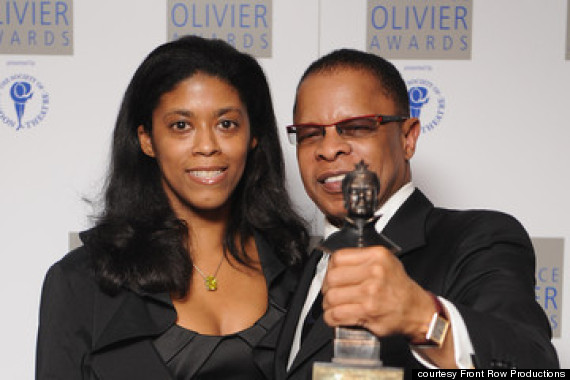
Alia Jones-Harvey and Stephen C. Byrd

Orlando Bloom and Condola Rashad
Following the success of two more star-studded revivals, including “A Streetcar Named Desire" and Horton Foote’s “The Trip To Bountiful," Byrd and Jones-Harvey kicked off their newest production, "Romeo and Juliet," this past weekend, featuring a multicultural lineup -- an African-American Juliet (Condola Rashad) and a white Romeo (Orlando Bloom). The revival marks the first time in 36 years that the play will be produced on Broadway. Huffpost Black Voices spoke with Byrd and Jones-Harvey to get their insight on the industry, how their background in finance sets them apart, and what they plan to bring to the stage next. To continue reading, please click here.

Special Tip of our backward-wearing Kangols to Owa for bringing this to our attention.

Saturday, August 24, 2013

Reality vs. Fantasy in the Theatre and Film Business for Black Men and Women

Richard Gant
Sabura Rashid

Aduke Aremu interviews Richard Gant, Hollywood Celebrity actor from the West Coast (California)and Sabura Rashid from the East Coast (New York). Topic: "Reality vs. Fantasy in the Theatre and Film Business for Black Men and Women": The East and West Coast Conversation with Richard Gant and Sabura Rashid. To listen, please click here to hear about Gant's "Theatre of the Diaspora", the Senegal connection, and his Pan Africanist-- a global networking group for black artists, actors, and filmmakers, plus advice based on years of experience from Aduke Aremu for young black playwrights to go to Europe to get their work produced.

A Tip of our backward-wearing-Kangols to Owa for hooking us up with this great interview.

Friday, August 16, 2013

Owa on the State of Black Theatre (Part 2: A Solution)

"If for instance, New York black theater is the hub; than each city, in each state, should be a connective spoke in the wheel that drives our ambitions. Where projects can be tried out of town and then brought back to NYC for extended runs. This vital step can only be achieved through a nationwide coalition." 

WHAT IS TO BE DONE? 
Part II 
(A New Paradigm for American Black Theater Movement) 
A Call for an Action Plan for the 21st century 

Owa
Rationale 
Despite the rise of China, terrorism, the end of the world prophesies and doomsayers, America nonetheless has an amazing future in the coming century; it is the center of the universe. Folks are coming to America from all four corners of the planet. This wave-front of immigration will change demographics as well as culture. Two major groups of immigrants already impacting American culture are Latin and African. Both groups come from an experience of destitution, and both mean and brutal circumstances. Given a generation or two, their narratives of the trial, error and assimilation will trump African American tales of horror and racism under the pall of slavery. In other words, if we haven’t gotten over slavery and our disabuse by whites, emigrant populations will care even less about our angst than our tolerating white folk. We will be confronted by groups who have supplanted other racial influences— both political and economic in our communities-- and turn a deaf ear to our pitiful pleas for redress. Black Arts and especially black theater arts will suffer accordingly. So the task is clearly evident; not only must “our” theater arts be preserved, the method of creating theater and the systems that support it must be re-created. Theater literature must be refined and modernized. In the words of Jay Z: “do it for the babies.” 

Necessity of Organization on a National Level 
Before any action can be taken to ameliorate a consistently terrible situation is the acknowledgement that black theater has no sustainable institutions. Each generation starts out as if they have to re-invent the wheel all over again. We learn nothing practical from our history, making it neigh impossible to control our present circumstances and thus, we gain little for our future. Any attempt to self-actualize 21st century black theater must of its own necessity, firmly laying a foundation for sustainable activities. There must be ethnically controlled institutions for our music, dance and theater projects. Having created sustainable institutions lays the groundwork for another important phase of the work, as it were: the necessity for networking on a national level. If for instance, New York black theater is the hub; than each city, in each state, should be a connective spoke in the wheel that drives our ambitions. Where projects can be tried out of town and then brought back to NYC for extended runs. This vital step can only be achieved through a nationwide coalition. 

Permutations as the Mother of Inventions 
It is a dynamic feature of the current theatrical milieu, that the cultural imperative is that community theater must adjust if not entirely leave its brick and mortar environ behind, changing the manner in which audiences experience theater; understanding that conventional staging projects is a divisive programming strategy, resulting in a debilitating population and economic deficit. That audience will stay the same, and consequently, the work those audiences demand will stay the same. There are entire market segments of the black community lying uncultivated, not yet realizing its fuller potential. These would include youth and others without the experience of the middle-class perception of theater. The style in which plays are conceived and written as well as their public presentation must change to seduce an audience that is yet to realize its importance to the entire concept of Black Community Theater, its theory as well as its practice. Theater arts must demonstrate its universal dynamism, its commonality with the experience of its audiences, providing not only entertainment of the finest quality, but raising the level of individual and therefore, community awareness of how the emotional underpinnings of life works, motivated by human drives through the active examination of the human condition. Theater arts are the advance guard of a new and insightful revolutionary force, instigating revelations of informed awareness. These changes can only occur if the dynamics of theater itself changes. The aim here would be to transform empirically, both renovated content and refurbished performance values and techniques. Audiences must be regarded as a significant active resource, and not a fixed, faceless group of strangers, sitting in a darkened room, minding other people’s business. 

Organizational Methodology 
I will strongly declare there is a critical call today in Black American Theater for producers and artistic directors, proficient in dramaturgy to cultivate and expand new works projects, to encourage emerging and established playwrights, to develop innovative and original work in order, to expand the scope of not just Black, but the global American theater as well. This would be a good thing. The most fertile ground for developing such a broad and inclusive program would be the established, resource rich and powerful intellectual plants of academia. Our future in theater will be secure in the output of colleges and universities. Their positive and corrective intersection with the theater industry could produce an unparalleled upsurge in a successful creative worldview, relevant to the twenty-first century American Theater. There is however a caveat here. New ideas demand new attitudes. To paraphrase Albert Einstein; problems cannot be solved by the same mentality that produced those problems. A good case in point: The reaction to Hip-Hop music and Ebonics. This art form (they are art forms) has its basis in ethnic vernacular, proto-Islamic (Black Muslim Scientology, viz. Five-per-Center dogma) and current social issues of the times. There existed a huge intellectual reaction from the middle classed values of both the Black Church and the Black Intelligentsia. Regrettably, lacking participation by our most astute and conscious minds, hip-Hop morphed into “Gangsta Rap” over the decades with very problematic and dubious results. In the early twentieth century, the same middle class reaction to early Jazz music (which brought us rhythm and blues as well as rock and roll) left these media bereft of academic input and support (until of course, white institutions recognized its values). Both art forms have blanketed the planet earth in an unprecedented and immersive mode with rare exceptions, sans black artistic management and controls. In order to avoid making this continued and fatal error; Black Academia will have to drastically change its attitude about black theaters’ art and culture matrices. A primary awareness of theater culture is the need for new works. Great theatres have always had their playwrights. We must have our new playwrights, and we will not have them unless we give them many outlets to see their plays produced. This is the best way in which they can learn to write better plays. 

Our theatre can never be stronger than the quality of its plays. The production of classics is healthy, but, we need progress, and the seed of progress lies in the new plays being written. The case for creative institutions as an underpinning of black theater is based upon my assertion that theatre, in and of itself, is an artwork, a collaborative artwork whose principal artist is the artistic director. The artwork is not truly alive until it meets its audience, so that we absolutely want and must have the audience with us, responding with their imagination and belief. But it is we who choose and create the work. Ed Bullins, Susan Lori Parks or August Wilson never asked anyone what they wanted to see or hear. Their art comes from deep within each individual artist and his/her confrontation and contemplation of contemporary times. The artist may be lonely or feel unsure of, or inadequate to, what she/he is making, but they must cling to their integrity. Add the proper institutional framework and there is created, a theatrical wholeness of an important and longitudinal sort. 

Dramaturgical Methodology 
Readings of the playwright’s script several times begins the process, taking notes of those valuable first impressions, and then discussing the play with other people. The ensuing dialogue reviews this information with the playwright and others, revealing important clues about the writer’s-- and the play's characters'-- intentions and process by posing questions like: Why was the play written and when was it started? How many drafts are there and would it be a good idea to read earlier versions? Have there been readings or workshops, and what was learned from those? Whom should I talk with to understand more about the world of the play? In speaking with the playwright, should there be any questions about their own work, or if it needs any assistance in preparation for rehearsals. Writers usually need help with something, and this then opens up room for discussion. Here are Six Dramaturgical Tenets as guidelines of new play dramaturgy: 

 Tenet #1: Take your cue from the playwright; the practice of new play dramaturgy involves not only experience and analysis, but diplomacy as well. 

 Tenet #2: Avoid irrevocable mistakes. Dramaturgical collaboration requires trust; when that trust is compromised, it’s not easy to recover. Generally, it’s wise to consider the playwright as the indisputable authority on the text. Your questions and their answers begin the dialectic that is the dramaturgical dialogue. 

 Tenet #3: Praise is always welcome, but critical inquiries should be specific and posed as questions. 

 Tenet #4: Discussing process relieves anxiety. Playwrights need to know what’s going on at each stage of production, and knowing the director’s rehearsal schedule allows important textual questions to be addressed beforehand. 

 Tenet #5: Ask the playwrights to articulate what they want to achieve, and also what they may want to avoid in production. 

 Tenet #6: Analyze the text. Ask the playwright questions like: 
 How does the structure facilitate the progression of action? 
 Is the structure efficient? 
 Is the sequencing effective? 
 Are point of view, stimulus, disclosure, similes, and turning points clear? Or, if desired,  are they clearly indefinite rather than blurred? 

These questions can ignite exchange about the play’s unifying metaphors, themes, and ideas, and may evolve into discussions about examination of character journeys, maturity of style, event, or structure. As the directors and designers are brought into the conversation, the dramaturgical dialogue expands to become more production centered or orientated. When rehearsals begin, the dramaturgy then centers around what remains unclear, what’s irrelevant, what’s missing, and focuses on arrangement and understanding.

Each player in the creative process of dramaturgy remains uniquely their own person; however, the above outlined process, effectively serves the production, the play, and the playwright, and is more or less archetypical of production dramaturgy. 

The important thing to recognize about dramaturgy is that dramaturgical skill is demonstrated through process. Fundamental to the dramaturgical work is the confidence that research and intellectual activity inspire the making of theater. Intellectual efforts and creative process are inseparable. Dramaturgical collaboration is built on the belief that consciousness expands an artist’s tools, that understanding history and responding to context can only enrich everyone’s understanding and release surprising, unexpected ideas. 

Such collaboration reiterates as a major tool and goal of the definitions of the production process, extraordinarily consistent with growth of the theater as a current era. Dramaturgy should immerse big ideas and small tasks in a total process, and try to keep the two connected. Dramaturgy itself is about inciting change, and so replicates any creative process, which is about change, the movement from question to discovery can be affirmed in that truth. Collaborative dialogue demands a high tolerance for open spaces, advanced skills in uncertainty, a hunger for the question and a commitment to surpass what is routine. 

Finally, in choosing a project to produce from a dramaturgical perspective, there are galaxies of elementals that require focus if something stands a good chance of working. Is it a story that delivers to the audience what the audience came to get? Does it interface with the world that we live in a way that people are already talking about or that they want to talk about? Does it have the prospect to be current in that way? Does it have a role in it that will either give a star, or someone who will give a star performance, an opportunity to give a live performance that people will want to see? Finally, is it a manageable financial arrangement that can be made? In other words, it’s very hard to produce a play that has thirty-five people in it, or a play that has extraordinary theatrical demands, unless you can configure these elementals in a reasonable amount of time and for a reasonable amount of money, the chances of mounting a sustainable show withers on the vine. 

What makes a good dramaturgical producer? 
The quick answer is taste, energy, passion, and access to money. The one thing that many, many Black producers lack is any real dramaturgical skills; a skill, happily-- which can be learned. There are structured and emotional ways of telling a story that are not rocket science, the key is to understand when a story is going wrong and how it’s going wrong. The current difficulties and demise of black theater at this juncture is not solely the problem of lack of funding. It is the lack of process. When one individual maintains the sole, god like power, to devalue a playwright, usually, any success of that theater is mainly given to luck. In this kind of crap-shoot luck can and does usually run out. 

I’m not talking about running a theater by committee either. The discussion here is about collaboration—true collaboration—by stake holders in the entire process. This process as it were, provides an opportunity to put to the test, the old historical race consciousness; we cannot agree on a single scheme to save our own skin. To devise a strategy for producing new works that sell tickets and give theater professionals’ income is and should be the goal of the new dramaturgy. A play is a product. An artistic product, but a product nonetheless. The playwright is the designer of this product. However, it takes a whole factory of workers to make this product viable and market ready. The playwright’s script is just the first cause. What I would term a market structure is necessary for the successful promotion of this product in the marketplace which is logically, a theater. However, definitions of theater are changing. This is an important factor for consideration among other things. 

An Organizational Call 
There needs to be a national call for organization on a regional basis from the four corners of the country. Eventually spreading to other areas of the planet. We need to gather under one tent and tease out the methodology of success in this venture of theater as a community effort. Creating compelling theater that all of America wants to see. The NYC based Black Theatre Network (BTN) for example can initiate a national call for a roundtable on the issues outlined here; with theoreticians like the Molettes, Samuel Hay, James Hatch, Dr. Henry Miller and others, chairing working groups, addressing the issues for further dialogue, future planning and actions. What I’ve outline here is not an end all, be all. But rather, a mechanism if you will, to kick start a 21st century Dramaturgical Theater Movement to redress the ills of our failing institutions. 

Owa 
Bronx, NY 
August 16, 2013

Monday, August 12, 2013

Owa on the state of Black Theatre

A New Look at Old Perceptions 

Please click to enlarge.
What is Being Done? 
Owa
Some time back, playwright OyamO opined the American Black Theater of being dead. In light of current funding situations (and there is a situation) along with a disheartening and skewered aesthetics lending a certain stench—something is rotten in Black theater and, presuming his argument has some legitimacy, scrutinizing the dramaturgical cadaver, one can surmise, the political/economy of black theater if not entirely dead, it is at the very least, zombified with sociologically fixated creatures eating the brains of its young while insisting their theatrical fare is the latest in haute cuisine. 

A general and informal examination of our current theatrical environment appears to offer up a dearth of dramaturgical and aesthetical criterion for a 21st century challenge to the existing and prevailing notion of what theater can be doing, from and for, the black theater going community. Playwrights are starving because of the lack of experimental risk-taking and solvent venues. Directors are scratching the surface, seeking one tiny worm of possibility in a hardened earth, resistant to their visions and the thousands of dollars spent on education, leaving mostly, post graduate, student loan deficits. There seem to be only a handful of Artistic Directors left on the tottering brink of insolvency, desperately seeking if not Susan, at least, four weekend running shows in the current fiscal year. 

Black actors are milling about, disenchanted with stifling reading venues-- which invariably lead to nowhere-- and wondering if and when they do get an up and running project who do they have to fuck to get outta this show? Living and working in New York City, the cultural capital of the western world, offers little solace for the paltry offerings of both For Profit and Not-for-Profit Theater. Speaking of the latter-- were it not for the reading circuit, many actors/playwrights and directors would lose their minds in this theatrical wasteland of diminishing returns. 

The black theatre practitioner like their white counterparts, are a special breed of artist, loving and passionate about their work ideals and stubborn in their occupational ethics to do any show at any or no cost. We are a hardy lot, like warring guerrilla combatants, living off the land while hotly pursued by those well-armed demons of mediocrity, espousing pretentious calls for order and the rule of law. Thinking everything must be fine in their theater existence, as they feast on themselves, waxing grandiose and corpulent as the background music of clinking cocktail glasses serenade their self-serving delusion. 

Our black audiences are emanating a distinct odor of senility, and decomposing, with little disposable income to pay for tickets which may not pay off a respectable entertainment return chronicled as an unforgettable evening of live theater. Our younger people find scant charm ---or relevancy-- sitting through live theater if it is not a celebrity concert encircled by an arena of thousands cheering, boozed-up and drug-addled hipsters, enshrining the virtues of the thuggish. 

Then there are the aesthetics of Black Theatre itself. Few of us get the chance to fail. Because of lack of resources, we come in failing. I’ve known many playwrights after more than a quarter of a century of slaving for their Muse have gone on to the great stage in the sky with luckily one non equity production to their erstwhile credit. The few up and running production companies are either doing coteries of established writers, sanctioned by downtown savants or dead playwrights who by dint of their death, offer no meaningful resistance to the issue of royalties. 

Finally, there are those companies holding high the banner of universalism— doing white plays in black face-- somehow overlooking the fact that white companies are not doing August Wilson or Ed Bullins in white face. Mature, middle class black audiences (who can afford and do purchase Broadway tickets) are hungry for live theater; it represents a certain societal standing and emotional rank of the intelligentsia within its comfortable routine of westernized culture. However, their theatre demands star power in casting, and safer subject matter eschewing riskier topics, evoking pertinent discussions during after theater dinner talk. Black high-end theater goers like their out of town counterparts are being entertained and not informed vis-avis the current human condition. Not that any real theater audience is adverse to thought provoking drama; American audiences are being numbed down as a matter of course, in the general entertainment malaise. A bread and circus atmosphere seems to exist surrounding current American Theater and our critical reviews carry less and less intellectual credence as counterweights to current fare. Even Tyler Perry’s brand (with its fantastic business model) of home spun theatrics has given way to his involvement in the wider reach of the electronic media, where billions of bucks are at stake. 

In New York City there exist only one weekly black print newspaper, its critical and aesthetical evaluations are treated as byproducts of publishing models. Other media hardly seem to acknowledge the existence of black dramatic efforts unless the producer is on the entitled list. 

America is a black and white nation. There is a black president with a white agenda. There is a black church and a white church. There is white justice and there is black justice. There is a white economy and there is a black economy. There are white communities and there are black communities. There is white theater and there is black theater. Aside from all the other white/black thingy’s, a peculiarity of America theater along the great color divide that is mainly a white thing: churches are turned into theaters. In the black communities theaters are turned into churches begging the question, Are black churches better revenue generators than black theater? 

All of the above considerations point for this author in one specific direction, what can be done about it? 

What is to be done?
Most non-profit theater is on the foundation and government dole. Without it, likelihood of survival is doubtful. With it, likelihood of realizing a cultural imperative is also doubtful. The financial strain to survive on the dole implicates— in the negative-- the grim future of a theater's ability to create theater arts. Unique black theatrical functions such as pantomime, clowning, dance, puppetry, exotic musicals and experimental projects are unfunded and therefore almost non-existent. So an entire realm of theater lives in the outer darkness of no money for support, Hades. Where there is no fiscal support, there is little development. An underdeveloped American black theater is akin to an underdeveloped black Africa— everyone is starving, unhealthy and mentally unstable and the children have little future. 

Like any colonial operation, there are prized elites with their vested stake in the status-quo; while the majority of us are restless natives, distracted by a contentious environ, where dreams are dear and life is cheap. American Black Theater (as well as western hemispheric Diaspora) is a contrite expression of the larger matrix of our collectively global social ills. As in the case of our political movements, eliminating the heads of our leadership, results in blind un-progress to nowhere. In our theater, the lack of leadership, results in the circular no-whereness of a century’s long trek through slowly realized— if realized at all— potential. 

So it would seem a black theater movement would require nay, demand, an all-inclusive dramaturgical leadership. Dramaturgy may prove to be the key that unlocks the self-imposed prison of wishful thinking that confines us to a static and flat theatrical landscape. What then is dramaturgy? In a word, dramaturgy is consequential guidance. 

To quote a biblical passage (and our condition is of biblical proportions) “For we like sheep have gone astray. Everyone to his own way.” Dramaturgy is a way of “getting it.” It can provide—if well thought out--- a set of operational parameters by which artist and their artistic organizations can potentate a fuller operational artistic model, based upon practical guidelines of consideration. The production of classics and other dead poets' works can be healthy to an extent, but we need progress, and the seed of progress lies in the new plays-– unproduced, unread, and unavailable-- the ones that are stacking up in the bottom drawers of a playwright’s desk. The older operational team models are quickly becoming useless. Where it was the producer and director with its satellites of playwrights contending and controlling the script process. There are now phalanxes of professionals, insinuating itself into the creative endeavor. The stuff of deliberation that propels theatrical projects must be a theatre that refuses serving the function of making money alone and start serving the revelation and shaping of the process of living. However, this goal can only be achieved with dramatic/theatrical projects that are designed for sustainable production runs. A four week run of a show is neither enough time to allow the show to breath, the actor to develop his/her character, and its audiences to consider its true merits; nor does it quantify the project as a viable candidate for inclusion in the canon of theatrical literature. 

Black theater must be revolutionary on two equally important fronts: business of theater productions and the aesthetics of creating theater literature. Consider the above and soon I will return to this topic, expanding on the notions contained herein. 

Owa 
Bronx, NY 
August 12, 2013

Tuesday, August 6, 2013

Playwrights on Writing

Please click to enlarge.

Thanks to one of our favorite playwrights, Owa has brought to our attention this great LA Times series on writing written by playwrights. We encourage you to check it out.

Sunday, June 23, 2013

Free reading of Owa's "U" Sunday, 6/30 (NYC)

U 

are invited to

HERE ART CENTER’S


145 SIXTH AVENUE

Sunday June 30th 2013

1pm

Reading of the new play

U
Parts I & II

Written by Owa
Directed by Michele Shay

With talkback


 U, a play on a day of reckoning for unhappy lovers Abba and Dizzy in a futuristic American dystopia, where anything goes, but not far enough.

Featuring (in order of appearance)

Jason Marx

Dana Managan

Sergio Castillo

Maxemillian Corkum

Annemarie Agbodji

Free admission

Thursday, March 28, 2013

A Real Paradigm Shift in Black Theater

A Real Paradigm Shift 
Commentary by
Owa

In my consideration of the pervasive malaise afflicting the so-called Black Theater in this the twenty-first century; I am painfully reminded of Langston Hughes’ reproach to his fellows during the heyday of the so-called Black Renaissance (and I’m paraphrasing) “when white people stop spending money on us, we will dry up.” Which is exactly what happened to the Black Arts during and after the Great Depression in the twentieth century? 

Now in the twenty-first century, the wholesale robbery by big Bad Bankstas and the ensuing economic decline; American theater in general and Black theater in particular finds itself—again, facing pertinent issues of survival. The awful reality of our situation is compounded with the death of so many Black Theater venues unable to keep its doors open. Those that do so are heavily reliant on foundation funding and not grassroots audience support. To intelligently consider these issues it is first necessary to dispel some very pervasive myths that cling like cobwebs on the psyche of Black Theater professional practitioners. The first being: “there is no money in theater.” American Theater is a multi-billion dollar industry. With a trickle down effect to the artist; this Paradigm Construct constricts the flow of capital from top to bottom. If artist scramble for the scraps thrown their way; they are far more obliging than they would be otherwise, having full access to modes of production. What are these modes of production? 

Tyler Perry
First, there exist the Theater hierarchy models with the “producer” allegedly at the top. Who is actually a front office fake. Producers don’t produce anything but the myths. They are conduits for the money given to them for productions. If the dismal history and experience of producers in Black Theater is any indication, this is inherently, a flawed model. A case in point: It is highly unlikely that any producer –white or especially Black--would have produced even one show by Tyler Perry. In addition, Mr. Perry’s theater requires a constant of grassroots audience support at the box office. In other words, his shows could not be dependent on the suspect ability of “producers” to cobble together funding for shows needed to run in such a manner as to garner a national profile of his brand—make no mistake—his is a branding-- of theater. Neither did Mr. Perry attempt to do theater in the conventional sense, nor did he court the existing and established paradigm construct for distribution of his theatrical product. 

Many have problems ranging from aesthetics to just plain hatin’ with the Tyler Perry product. However, for all the castigation of his work; I have yet to hear any aesthetic or intellectual criticism of his audience, who by the way, love his work with an exceedingly great love. Those who rant against his art are mainly those who have yet to put forward an artistic or intellectually viable alternative to these issues; by failure to develop a production modality that offers YOUR theater product to the very same audience. The likelihood of this alternative occurring is ever so slight because of the heavy reliance on the establish paradigm by the mainstay of Black theater operators, professionals and practitioners. This is decidedly a stranglehold on the growth of Black Community Theater. We seem to be waiting for “better times.” There are no better times coming. There never were better times. There were times when we enjoyed the influx of white money. But his was also true of the Public Welfare system. Speaking of welfare… 

There exists a baleful “Culture of Lack” casting a pall of disambiguation in the communal conversation defining the true essence of an efficacious and viable Black Theater Business Aesthetic. 

"Our theater resembles those myriad third world nations, full of unimaginable resources, yet dependent on handouts from wealthy societies whose very wealth is a result of our resource inequality." 

Much of our talent resources are knocking at the doors of white groups who have a mandate to maintain a numbers game strategy, fulfilling funding requirements for diversity. There is a Monopolistic, Combine and conglomerate trend in America manufacturing, labour and entertainment industries. 

I won’t go into further insults and slander against the existing order of things and its minions, but rather, will allow my readers to weigh, reflect on and engineer their own thoughts concerning these matters at hand. In many ways I have a distinct feeling of being somewhat akin to Noah who said to those who wouldn’t listen, there is going to be rain—and lots of it. 
Owa Jackson

Owa 
Bronx, NY 
March 28, 2013

Monday, October 29, 2012

Words of Success

"You must once and for all 
give up being worried about successes 
 and failures. Don't let that concern you. 
It's your duty to go on working steadily 
day by day, quite steadily, 
to be prepared for mistakes, 
which are inevitable, and for failures." 
--Anton Chekhov

A "Tip of the baseball cap" to Owa.

Monday, October 22, 2012

THE ESSENTIALS OF A PLAYWRIGHT by Owa

Owa

THE ESSENTIALS OF A PLAYWRIGHT 

Theater is a collaborative act. There are a train of complex elements and craft-persons involved in the creation of a live show. At the helm of this mĂ©lange of master builders is the playwright. The architect of imaginative worlds brought to life by a predisposition to a fine madness, and a possession of the soul by the spirit of one’s Muse. The practicum of playwriting was known in the Kingdom of Kemet as well as by the dramatist of the ancient Hellenes; both enhancing theater to its most elegant format. 

Despite its most ancient pedigree, theater and the art of Playwriting is neither an exact science, nor a profitable one. It is on the one hand, a baffling and on the other, a strange scheme. No one hires a playwright, (except when set out to pasture in academe to teach) and therefore, no salary is earned. It may and usually does, take years to write a play. It will also take years to find someone to produce it. With the almost certain possibility of many rejections and hurt feelings. Once having successfully done so, one’s audience, or critics may not understand or like the show and overnight, one’s project is out of business. There is also the risk of group trance where all involved in the project, have no idea how bad it is, only to discover in costume, under lights, and on the boards, it’s a turkey. 

The term a “play” is itself quite a mystical experience in character and essence. What has been routinely called show business is something more, and exquisite. The essence of the playwright’s task and genius is the excavation of the intimate truths of his or her characters in the dynamic relationships of a compelling story. A story that defies death and lives on as long as humanity itself may exists. In this sense, a play is a living thing, and like life, no two moments are the same. Like life, the play dies when the audience leaves the theater or the show closes at the end of its run. However, unlike life, the play can be reawakened (like a resurrection) and breathe again, through living and loving voices. 

Yes, I would say the practice of the dramatist, director, thespians, producer and technicians is a spiritual experience... 

Owa 
Bronx, NY October 21, 2012

Friday, October 19, 2012

Advice to the Playwright

Advice to the playwright: 
  • Never let anybody alter your work. But if they do, and it happens to make it better, be prepared to take credit for it. 
  • Never allow directors to intimidate you, but have some sympathy for them. They are professional cat herders and you are why they drink. 
  • Strive to be kind to actors, even when they're being impossible. They have a difficult life, and without them, you're a novelist.
  •  Praise and blame are illusions. 
  • Never take kind words for granted, but do your work. 
  • Just do your work. Don't let anybody stop you. Keep writing no matter what. 
  • Direct, act, build sets, earn your right to be in a theatre. This will give you insight into the absurdly difficult tasks you set for others when you write. 
  • Help other playwrights when you can, even if they don't like you. Jealousy is poison. We're all in the same sinking ship. 
  • Calm down. Hysteria is contagious in rehearsal, and life is short. 
  • Break the rules. 
  • Trust your own instincts. If your instincts now and then betray you, learn from it, but don't stop trusting them. Experience can deepen and fine tune your instincts, but in the end, you have nothing else. 
  • It's better to be hated for what you wrote than for what you let somebody else talk you into writing. 
  • Write without fear. 
  • Love without hope.  
  • --- DON NIGRO 
    A "Tip of the Hat" to Owa for passing this along.

Monday, July 2, 2012

Owa: A 21st Century Poem

Please click image to enlarge.

Friday, April 27, 2012

Owa Jackson interviewed for CULTURAL WEEKLY


Owa Jackson

AAPEX founder Jaz Dorsey interviews "street corner Negro" absurdest playwright Owa Jackson for Cultural Weekly. Click the link for a totally unique perspective about living and writing about the life of African Americans-- absurdests. 

Saturday, January 14, 2012

Ethnic casting stats for New York theatres


A "Tip o' the Hat" to Owa again for these eye-opening stats. Owa suggests we form a Political Action Group (PAC)to address these discrepancies: "This other theater is providing jobs and careers for their own; while we hang about like beggars on the streets. How many of political representatives in NY City Council and others on state and federal levels have demonstrated an active interest in the career issues involved here? This could perhaps become a nation-wide effort. If its true in New York, then its true everywhere else."

Ethnic Casting Stats for NY Theaters
Here is an ethnic breakdown of casting at the largest non-profit New York Theatre Companies from the website linked below...very interesting stuff.
2006-07 to 2010-11 seasons:
ATLANTIC THEATRE CO
Caucasian: 95%
African American: 3.5%
Hispanic American: 1%
Asian American: 0.5%
ROUNDABOUT THEATER COMPANY:
Caucasian: 90%
African American: 8%
Hispanic American: 1 %
Asian American: 1 %
PLAYWRIGHTS HORIZONS:
Caucasian: 86%
African American: 12.4%
Hispanic American: 1.1%
Asian American: 0.6%
LINCOLN CENTER THEATRE:
Caucasian: 76%
African American: 17.5%
Hispanic American: 4 %
Asian American: 2.5%
MCC THEATER:
Caucasian: 84.5%
African American: 5.8%
Hispanic American: 3.8%
Asian American: 3.8%
Arab American: 1.9 %
NEW YORK THEATRE WORKSHOP:
Caucasian: 73%
African American 12 %
Hispanic: 3%
Asian American: 4%
Arab American: 8%
PUBLIC THEATRE:
Caucasian: 64%
African American: 21%
Hispanic American: 5.6%
Asian American: 6.5%
Arab American: 3 %
SECOND STAGE THEATER:
Caucasian: 80%
African American: 8.7%
Hispanic American: 4 %
Asian American: 6.4%
Arab American: 1 %
SIGNATURE THEATRE:
Caucasian: 47.5%
African American: 44.9%
Hispanic American: 2.4%
Asian American: 5.5%
THE NEW GROUP
Caucasian: 88%
African American: 2%
Hispanic American: 2%
Asian American: 7%
Arab American: 1%
MANHATTAN THEATRE CLUB
Caucasian: 86.5%
African American: 11 %
Hispanic American: 1.0 %
Asian American: 1.0%
Arab American: 0.5%